
George Matus
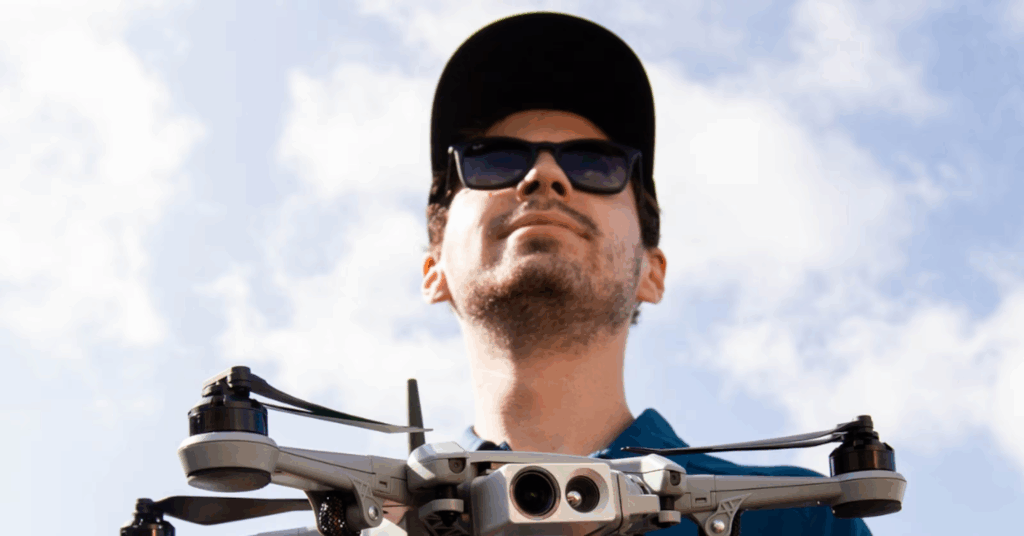
From a very young age, Matus immersed himself in the world of flight. By the time he was 12, he was already building his own quadcopters and testing them for drone companies. His fascination evolved quickly: he began designing advanced drone prototypes, including a large quadcopter with two-hour endurance and another one capable of over 100 mph using thrust-vectoring technology a very sophisticated design.
In 2015, while still in his teens, Matus founded Teal Drones (originally called iDrone). He later received a Peter Thiel Fellowship, an award given by Peter Thiel’s foundation that gives young entrepreneurs $100,000 to drop out of or forgo college and work full-time on their startup. Matus designed Teal’s early drones around speed, modularity, and compute power. Their first consumer model could reach speeds of 70 mph (and in testing even higher). Uniquely, these drones were equipped with small onboard computers (e.g., NVIDIA chips) capable of running machine learning and image recognition essentially, they weren’t just flying cameras, but “flying smart computers.” He also made the design modular: arms, batteries, and other parts could be swapped or upgraded. Matus raised early funding while still in high school around $2.8 million in seed funding, according to reports. He led the company through “flying, crashing, rebuilding and modifying” dozens of prototypes to nail down a viable, high-performance design. Over time, Teal pivoted from focusing mainly on hobbyist / consumer use to serving more serious enterprise and defense markets. They developed the Golden Eagle, a rugged reconnaissance drone designed for military and government use. Then they released the Teal 2, a next-gen small, unmanned aircraft that’s modular, built for night operations (with an infrared / night-vision camera), supports multi-vehicle control, and has onboard intelligence capabilities.
Matus also played a key role in Teal’s relationship with Red Cat Holdings, which acquired Teal in 2021. After the acquisition, in 2023, Matus was appointed Chief Technology Officer (CTO) of Red Cat. Under his leadership, Teal pursued a major U.S. Army program: the Short-Range Reconnaissance (SRR) contract, which would equip infantry units with small, backpack-deployable drones.
Teal’s “made-in-USA” message has become increasingly important. In the context of rising concerns over reliance on Chinese drone manufacturers, Teal’s U.S. production and defense-grade security features make it a compelling partner for government contracts.
On the recognition front, Matus has been acknowledged as a Peter Thiel Fellow, featured on Forbes 30 Under 30, and holds more than a dozen patents in drone related tech.
3 Comments
Leave a Comment
You must be logged in to post a comment.
This is such an inspiring story! The Peter Thiel Fellowship sounds like such an amazing opportunity for young entrepreneurs. Its cool to see how far his ideas went and how successful his designs were.
Matus seems like a very intelligent and innovative individual. It is very impressive to see all of his accomplishments such as being rewarded with the Peter Thiel Scholarship for a whopping amount of 100000. His flying smart computers are a great and ingenious idea.
Starting with building quadcopters at age 12 and evolving into creating advanced, modular drones shows incredible vision.