
Ben Zaver and Hannah Perez – Seeq
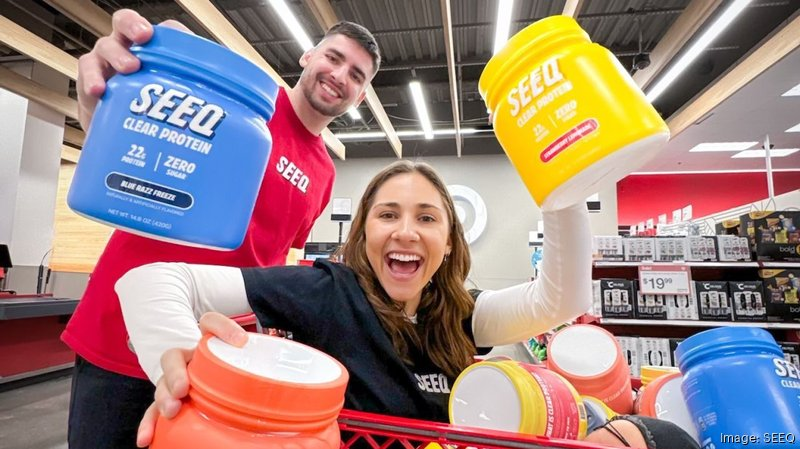
Ben Zaver graduated from Mankato in 2020 and didn’t want to drink another chalky protein shake. That’s the gap he found. He thought whey should taste like juice instead of a milkshake, so he spent a year running blind taste tests on his family and working with food scientists to figure out whether clear whey could actually taste good. He met his co-founder Hannah Perez in that process. She had built a marketing agency and walked away from it to do this instead. They launched in October 2021 with four thousand bottles packed and shipped out of his parents’ house in Plymouth, Minnesota.
TikTok did the rest, but not immediately. It took around forty videos before one caught, which is the part people skip when they tell this story. Then Mark Cuban’s son found the product on TikTok, ordered it, and Cuban posted his own review rating it a 10 out of 10 and saying these guys should be on Shark Tank. That video reached over 600,000 people.
And then the actual problem started. They were out of stock for six of their first eight months. Thirty-eight pallets disappeared in under a week. The lead time between placing a bulk order and receiving it was four months, which meant every viral moment arrived with inventory they had guessed at the previous spring. Zaver describes running the company like a logistics problem: “When a video does well, that’s when we do big sales. We have to think about that four months in advance.” The shorter version is “we literally can’t stay in stock.” They’re now around $15 million in revenue heading toward $30 million, in roughly 1,900 Target stores, and they’ve raised about $6 million total, which for a brand that size is almost nothing.
The number that stuck with me is forty. Not the revenue, not the Cuban video. Forty videos where nothing happened, and they kept filming anyway. It’s easy to look at a brand in Target and assume they got lucky with one post, but the thirty-nine that went nowhere are the actual story. That’s encouraging to me rather than discouraging, because it means the thing separating them from everyone else wasn’t a better idea. It was that they were still posting after the first thirty-nine didn’t work.
The other thing I keep thinking about is the $6 million. Most brands doing $30 million have taken four times that, and raising less sounds like a disadvantage until you realize what it forces. If the money isn’t there you have to be strict about every dollar, and you figure out what actually drives sales instead of spending your way around the question. I’d rather build under that constraint early than learn spending discipline after someone hands me a check